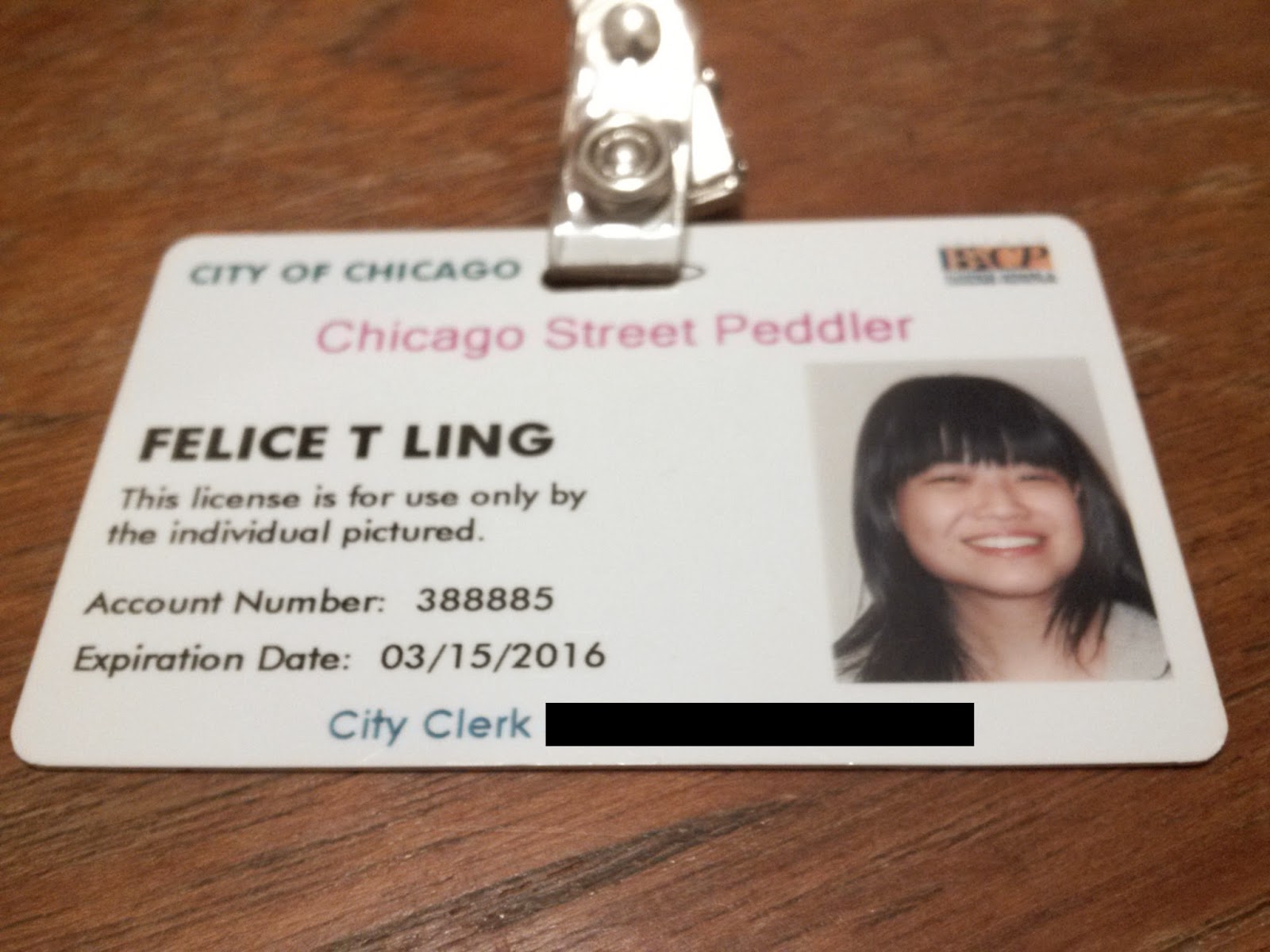
Sunday, May 24, 2015

A Mad Dash to the Faneuil Hall Restrooms

I got off early from work Friday afternoon and wandered over to Faneuil Hall. It was my third time there this year but my first time wandering through it alone.

My first thought?
I really needed to pee.

I had climbed up out of the Haymarket T stop with a practically unusable cell phone and an equally unreliable sense of direction. The red brick of the Freedom Trail led me through through the front entrance of Faneuil Hall, past a crowd that surrounded a group of break dancers that I had yet to watch.

I would have stopped, but I needed to pee, so I went into the first building. The stairs to the bathroom were blocked off. I went through that building into Faneuil Hall proper, walked all the way around the food court, and circled the entire area before going into the central building, only to find my pathway to the bathroom impeded by a line of tourists that came hand in hand with the start of Memorial Day weekend.

A few first impressions, as I essentially scoped out the area during a mad dash to find a toilet:
  1. These weren't "my streets." I didn't get the same sense of comfort and familiarity that I have when I walk down the Mag Mile in Chicago.
  2. It definitely had the same vibe. Mostly tourists wandering around, looking for something to do. No skyscrapers, no cars even. But it was still a city, made up of people who generally ignored each other. I was a stranger among strangers - people ignoring each other out of habit and necessity, but looking for a reason not to.
  3. I saw some people who looked like they were street performers, but no actual street performances at the time. Did the recent "Pay to Play" controversy kill off one of the scenes that made Faneuil Hall so famous?
  4. And I really really really needed to pee.
Eventually, I ended up near the front entrance to the food court, where the big street shows normally take place. There wasn't a performance going on, but a group of five people were gathered in a tight circle right in the middle of the performance area. One of them had a mic on and a bag of juggling clubs.

I sat down. Watched from afar. When it was clear that a show wasn't going to start anytime soon, I gathered up the courage to approach.

Their first thought? That I was with the Boston Globe, starting off "all friendly and everything" and then whipping out a pen and notebook to get quotes from them.

I laughed uncomfortably, then went on to explain my background in anthropology, as well as my experience as a magician and street performer. I didn't want to hide my research background - especially given how closed and guarded of the craft buskers tend to be.

Their second thought? That I was with "the feds."
Nope. I am not that either.

Then I sat back and watched some of the best street theater Boston has to offer - not as an anthropologist in the field but as an amateur busker learning from the greats of her time.

[Trying out tags for the first time. Not that I really understand them, so I'm not sure if I'm using them right.]
#Faneuil #busking #buskers

Wednesday, May 20, 2015

"You're only as good as your audience."

The street show (as I briefly and badly mentioned long ago) is the product of a street performer’s and her audience’s combined labor. The audience's role in street performance is just as important as the busker's in creating a distinctive urban "vibe."

How so? What happens when the audience fails to live up to their job as co-creators of a show - and "patrons" of street art? Some street performers will stop mid-show if they sense that their audiences are not appreciating their performance.

One particular show was cut short in just such a way. When a group of street acrobats asked their audience to “make as much noise as [they] possibly can!” and the response was lackluster, the acrobats immediately turned off the music and turned their backs to the audience.

Yes... street performers can fly.
Street performers = superheroes.
Yup.
Oh. And note the awesome audience.
When I asked one of the acrobats about this later, he explained their decision:

"I mean, it’s not easy what we do. Like, we can get hurt. Like right now, my knee is hurting. But I will do a show if the energy’s there. For me it’s not about the money all the time…. I was taught, you’re only as good as your audience. And if the audience is great, you’re gonna have a great show, you know? But, I mean, we did all of that building up this energy to grab the crowd and we were like, you wanna see the show? And they blahaaaaah. If we don’t get a good response in the beginning, it doesn’t make sense to do the show because that lets us know how the end will go. If they don’t give us enough energy, we’re not gonna do it because we could hurt ourselves and we’re exerting energy and they’re not giving it back to us. It doesn’t make sense to do the show."

The exchange of energy and the failure to exchange energy is, for these acrobats what makes or breaks a show. An audience that refuses to acknowledge the value that these buskers can give will, in effect, not be given a performance. By not acknowledging the value of a show, the audience lets the acrobats “know how the end will go.” Lackluster audience participation signifies the production of an eventual product that may just not be worth the labor.

While their decision to stop their performance mid-show has a jarring effect on their audience, they are not the only performers who manipulate the length of their show based on how likely they think their audiences will pay them. Jeremy, for example, does not start a full show unless a sizable audience has already gathered. If he manages to stop someone but is unable to build a good audience, he will do one trick, ask them for a tip, and move them along. Otherwise, he would waste his time and energy working for an audience that would not participate as much in the co-generation of an affective experience when, instead, he could be working to build another, better audience.

Tin Man also turns off his music and declares to his audiences, “I’m on break!” if his audiences have stopped paying him. He explained:

"That’s why I don’t dance all the time when people donate. I might get one or two donations, but if I don’t feel that appreciation from the crowd, there’s no reason to give my all into it because they’re not going to appreciate it. Not gonna appreciate it. I’ve been rejected so many times. [...] Those people are expecting you to do something for nothing. So he [another performer] dictates how long his show is – hell yeah. He says, ‘I’m cutting this one short.’ Ah, yeah. I hop off and say I’m on break. Yeah. Right in the middle of the song. I’m on break!"

These examples are all instances when street performers gauge how much “appreciation” their audiences will have for their show, prior to the moment when they have expended time and energy performing, and prior to the moment when they have actually requested money. In these instances, the street performer attempts to maintain control by manipulating who they want as members of their audiences.

An audience’s acknowledgement of the value of a show is thus indicative of the subsequent role they may play in generating additional value for the street performance. Their failures, as well as their triumphs, reveal just how closely linked they are to the affective labor of a street show. In the end, this link is what connects them with their fellow audience members.

In addition to the shared affective experience as members of the same audience, they also share in the work of nonalienated labor. By being co-laborers in the generation of an affective product that they, in turn, enjoy together, indifferent strangers develop the ‘intimacy’ of intimate strangerhood. Street performers, in effect, take indifferent passersby and turn them into intimate strangers.

Monday, May 11, 2015

"Pay to Play" - Worse than Working for "Exposure"

It's an interesting time to be a street performer in Boston.

Not too long ago, I was going to write about the hoops that you would need to jump through to get a spot busking at Faneuil Hall. You would need:

1. two references
2. video performances
3. a live audition

Now, it seems, the Faneuil Hall Marketplace management is requiring street performers to pay as much as $2,500 annually just to perform. Faneuil Hall isn't private land either - it is, according to this Boston Globe article, public land even though it is leased out by the city.

Not that it should matter. As someone who has looked into freelancing, I've learned that working for "exposure" isn't any different from working for free. Street performers can get around that because they can get paid directly by the people they are entertaining. Now, Faneuil Hall management is asking street performers to both entertain their visitors AND pay a fee to do so.

Check out the Boston Globe article here.

Sunday, May 3, 2015

I hate performing for magicians.

I love performing for laypeople.
I'm standing on hard concrete, making a fool of myself. Person after person walks past. There's a millisecond when they spot me and immediately un-see me. Their eyes glaze over.
They're polite, so they smile while they pretend that I'm not there.

I'm performing for a room full of magicians.
It's in the basement of the church; that's where all the brothers of the brotherhood meet.
Someone asked: Who wants to perform? One, Two, Three, Four people volunteer.
I'm new. The only girl there that day, the only one in the old boys' club.
It's only in my head
I think
when I feel eyes creeping towards me.
Anyone else? he asks.
I hate performing for magicians.
I volunteered.

Someone stops.
What've you got?
Not much, I shrug.
I wave a card. It's a color change, a metamorphosis of a Joker to a King.
Eyes widen. The audience builds.

The audience is already there.
I'm Five, so I watch One, Two, Three, and Four.
One is hiding that there.
Two is doing that trick from that book.
Three is doing something that I sometimes do too.
Four's probably got that up his left sleeve.
I'm watching a magic show.
I hate being a magician watching a magic show.

It's a coin trick. One, two, three coins.
Except there's no trick, since I'm just counting.
And being funny
or trying to be.

Magic for magicians.
Here we go.
I curl up my toes in my shoes.
That's how I deal
when my nerves are screaming.

The audience laughs.
I do the trick.
The coins jump one, two, three.
That's all there is to it.
It's magic.

It's a display of knowledge -
I get a compliment on how well I did [So-and-so's] [secret move].
[That magician] does a great version of this.
Check out [Master Magician's] book.
I thank them for their input.
I put away my number two pencil and blue and white Scantron.

I think I passed.


*I don't really know what this is. I had three cups of coffee today - three times what I normally have on a normal Sunday afternoon. This is the result.

Tuesday, April 28, 2015

A Narrative: My First Day on the Streets of Cambridge

There was the train station - what they call the "T" in the Boston area.
The first guy you see working when you climb the stairs out of the station is the one selling artwork. Even though there's an actual painter just to the left, this first guy is the one you see because he's the one you hear. He's got music playing. Not booming, but it's there.

Between these two vendors is another, sitting between them with a sign. I don't quite remember what it is, and I didn't take notes that day. It was a religious message etched into cardboard. Right on the other side, if you turned right coming out of the station, a person wearing a toga was speaking into a microphone.

On the back side of the station, there was a singer strumming a guitar.

That was 4 performances. 4 performances already going on at 1:30pm that Saturday afternoon.
All this on the little island of pavement that held the entrance to Harvard Square's T.

1:30? Yeah. I could hear the Tin Man's cautionary advice echoing in my ear: You need to come out here earlier, he had said to me once upon a time. For him, it was about putting in the hours. Putting in the hours helps bring in the dough, but that particular day, starting earlier would have done more than that. Starting earlier would have gotten me a good spot. A good pitch, as they say in street performing.

I walked west on Brattle Street, following the flow of pedestrian traffic - west first, then northwest. When I reached the end of that block, I had a fleeting moment of panic. Every single open space was occupied by a street musician. I really really really should have woken up earlier.

I turned around. Walked back to the station. Panic aside, it was a nice day out, and it was exciting seeing buskers around. I was wondering if toga-guy was done. But nope. Now there were more of them. Turns out it was the Bard's birthday, and they were celebrating with some street theater.

The painter on the left - the guy with no music on - seemed nice. He had a hat. I approached him. We chatted. I asked him about good pitches in the area. He suggested a spot across the street. It was a little narrow, but it was a good spot as long as the people in the store didn't mind.

Why not? It wasn't like I had any other options.
And it turns out that I had the spot right in front of the entrance of the Harvard Coop. Being in front of a bookstore in Harvard Square pretty much guaranteed a constant flow of traffic.

So I set up my stuff.

Before I was done setting up, I heard a voice: "Are you doing magic?!" My audience had appeared, and I rushed into my first show of the season.

Check out last week's post to see how that went. (In short: not great, but it got better).

Maybe it was because it was one of the first warm Saturdays of the year. Maybe it was because of the influx of tourists that came with the upcoming Boston Marathon. Or maybe it was a mix of understanding how street shows work (thanks to the large number of performers here) and the rarity of circle shows in Cambridge. But I didn't really need to work hard to get people to stop.

People just kept coming, and I kept performing, adjusting my show as I learned and adopted.

At one point, in between shows, the Shakespeare performers suddenly appeared. They stood a few feet away from, acting out a scene from... something.... I'm ashamed to say that I couldn't identify what play they were drawing from, but I wasn't paying attention to their words at all. I was surprised - reeling slightly from the disruption. They pretty much plopped right in front of me and started performing.

There was no point in trying to draw a crowd while they were there. Fortunately, they only needed about ten minutes for the scene. Then back across the street they went.

By that time (around 4pm), I was ready to give up my spot. The sun had long ago moved too far away from me, and the Harvard Coop cast its shadow onto my entire stretch of pavement. It was a cold spring, and I was back to shivering between shows. When two passersby with cake told me about free birthday cake across the street (Happy Birthday, William!), they offered to watch my stuff while I grabbed a slice. I took the opportunity to dash into the sunlight... and decided immediately that, yes, I would try to find a new spot.

I picked up my stuff. Went back across the street. The Shakespeare guys were wrapping up, so I waited patiently for the spot where the cake was being served. There was cake on the ground! (Ew! Or... yum? Depends on your point of view?)

And then suddenly, the vendor who sold paintings increased the volume of his music. I blinked, looking up across at him. We were close, but the space between us and the space between him and the other painter were about the same. When he saw me staring at him, he lowered the volume of his music and spoke.

"There's gotta be at least 50 feet between each street performer."

I just nod. "All right." Packed up my stuff, sighed, and went back across the street into the long shadow of the Harvard Coop. Another round of performances. Ran into three people I knew - one whom knew I would be performing there and two who did not. Of the two who came up to me after a show and didn't expect to see me there, one was from undergrad and one was from grad school.

Small world, eh?

Next show.

I have a mic, so it helps a lot, but a random (seemingly homeless) person decided to make use of my audience. He started yelling out while I was speaking. I couldn't hear what he was saying (mainly because I was doing my best to push forward with my show). A more experienced performer might have shouted him down.

I ignored him.
He quieted down after a while, but he chimed in every so often, interrupting my train of thought.

Still. Ended well. It was 6pm. I was cold and hungry and don't quite have the work ethic of the street performers I've observed. I packed it in. A drummer with a bucket asked me, as I was packing, if I was done for the day. I nodded. That was very nice etiquette, I thought.

Four hours of busking.
Rusty and with less skill than I had when I was performing regularly, I still managed to make the same as I made my best day in Chicago.

No wonder there's so many buskers here.
Welcome to Cambridge.

Sunday, April 19, 2015

Romanticizing the Streets

One: Street performing is not easy.

Just because I've busked a few weekends - and just because I know theoretically how some of the best street performers do what they do - that does NOT mean that I can just go out there and do it and expect success every time.

That's what was going through my head yesterday afternoon, when I was rounding off my first street show in eight months. Even as I was performing, I knew that I was messing up horribly. I had forgotten most of the lines that had become almost natural to me back when I was performing in Chicago. My timing was off, my jokes were rushed, and I just moved from one trick to the next without really focusing on my interactions with the audience.

I realized when I was getting strapped into the straight jacket that I should probably have stopped the show there and hatted my audience. But I didn't, and by the time I was strapped in, it was too late. All I could do was finish up the show, watch my audience trickle off, and rethink what I was doing before my next audience appeared.

So what had happened?

I was out of practice. I was using a mic and amp for the first time, wasn't sure that I was using it right, and got distracted by the feedback. My audience (surprisingly) appeared before I had even finished setting up. I wasn't ready for them. I was... having trouble getting my arm out of the straight jacket. I never sat down and scripted my show like one street performer said I should. I didn't... I didn't...

All excuses.

Somehow, in my time NOT performing, I got this idea into my head that I'm a pretty good street performer - and forgetting the fact that I'm good, yes, maybe. But I'm good for a beginner. Writing this blog and thinking about performing all the time, even when I wasn't performing, had somehow romanticized the whole thing for me. I was remembering all the highs and forgetting all the lows... forgetting the grit that it took to make it through a day where, for the most part, the majority of people walking past are ignoring you.

Two: Should I have prepared more?

What would that have entailed? Scripting? Practicing? The magic, I have down. It's the performance that I messed up on... but even if I didn't have the magic entirely down, should I have stayed in and just practiced?

The second crowd that day showed up pretty much as soon as the survivors of the last show walked off. I was too worried about messing up the straight jacket again, so I ended my show before I got there.

I got a larger hat from this partial show.

I could feel my show getting better as the day went on, as I stopped thinking about what I was doing and started focusing on interacting with my audience. There was one very awkward moment when I couldn't pull a card out of someone's back pocket... so, eh, I ended up just trying to fish around in there until I heard someone say, "What's happening here?" until, embarrassed, I pulled the whole deck out and found the card out in the open air.

It was ok. By that point, the audience had grown, and I was ready to try the straight jacket again. I had more or less messed up the trick, but the playfulness in my interactions with the audience was going great

I ended the evening with a police officer in my audience, my largest hat, and the performance high that I've been craving since my last show in Chicago.

So should I have stayed in and practiced?

The best thing about performing on the streets? If you mess up, you'll get to try again. And again. And again. The performance is the warming up. That's how buskers get good - not by staying inside and practicing but by going out there and giving it a try.

Three: What's different about Harvard Square?
Too much to share in this one blog post. (Sorry, Jeremy!) I will write about it next week, though. The main difference is just the sheer number of performers in Harvard Square and the politics that comes with that. Also - a lot more interruptions. More on that next week.

(And apologies for my horrible photo taking skills. I'll try and remember next weekend to take more pictures!)

Monday, April 13, 2015

Cambridge, MA: Home of Organized Street Performers

My Cambridge Street Performer's Permit:


 It's not as fancy as the one that the City of Chicago passes out...


But take a look at the back of the Cambridge permit:


There is a number listed for Street Arts Advocates. A quick internet search turned up this description: They are "a nonprofit arts organization cultivating ongoing fundamental relationships between arts and communities by celebrating self-expression as a basic human right essential for the healthy growth of youth, individuals, and communities."

In addition to that license, I also got a copy of the Street Performer Code of Ethics when I gave them my application. There is clearly some degree of collaboration between the street performing community in Cambridge and the local government - one that I didn't really see much of in Chicago.

And ooh! This part had me geeking out: In Cambridge's Street Performer Ordinance, there are the words, "...a written notice shall be sent to the Street Artists Guild no less than ten days prior to said hearing..." Content aside, there is apparently a Street Artists Guild in Cambridge!

It's a guild!
Woah!
I wanna join the guild! Just so... I can be in a guild. Right. Ok. Stopping with the geeking out.

There's also the Street Performer Ordinance itself. The beginning looked pretty similar to what I saw in Chicago... and then I saw this:

"If a performer attracts a crowd sufficient to obstruct the public way, a police officer may disperse the portion of the crowd that is creating the obstruction. The police officer shall not cause the performer to leave the location unless efforts to move the crowd fail to adequately protect the public safety or order. A police officer shall not ask the performer to leave the location unless all other means of restoring the public safety or order have been exhausted."

Legal language aside, this is the part that I found most interesting about the street performing laws in Cambridge. I don't know yet how these laws are reflected in practice, but the fact that there is legal language here that puts constraints on what the police can do is a huge step forward from what happened in Chicago.

In Chicago, the police seemingly reserved the right to move you, regardless of whether or not you were breaking any laws. When I described to my advisor my observations of police officers ordering several different groups of street musicians to move, he had asked me this question: What, then, was the purpose of getting a street performer's license?

My answer at the time? It was just a way of keeping track of them. You aren't legally permitted to perform without a permit, but even if you have one, there's always a chance that you will be asked to move to another location - either by a police officer, by the managers of a nearby store, or by the occupants of a nearby building. Any anonymous complaint from any individual could result in the removal of a busker.

That's why I find these laws so refreshing: Embedded into these laws - institutionalized in the City of Cambridge's ordinances - is the recognition that street performers bring value to the city. While other cities might pay lip service to that idea, Cambridge has actually legally embraced the street performance as an integral part of the city's cultural vibe.

Whether or not that is true in practice, though, I will let you know...
Right after I figure out how to transport all my stuff around on the back of a bicycle.